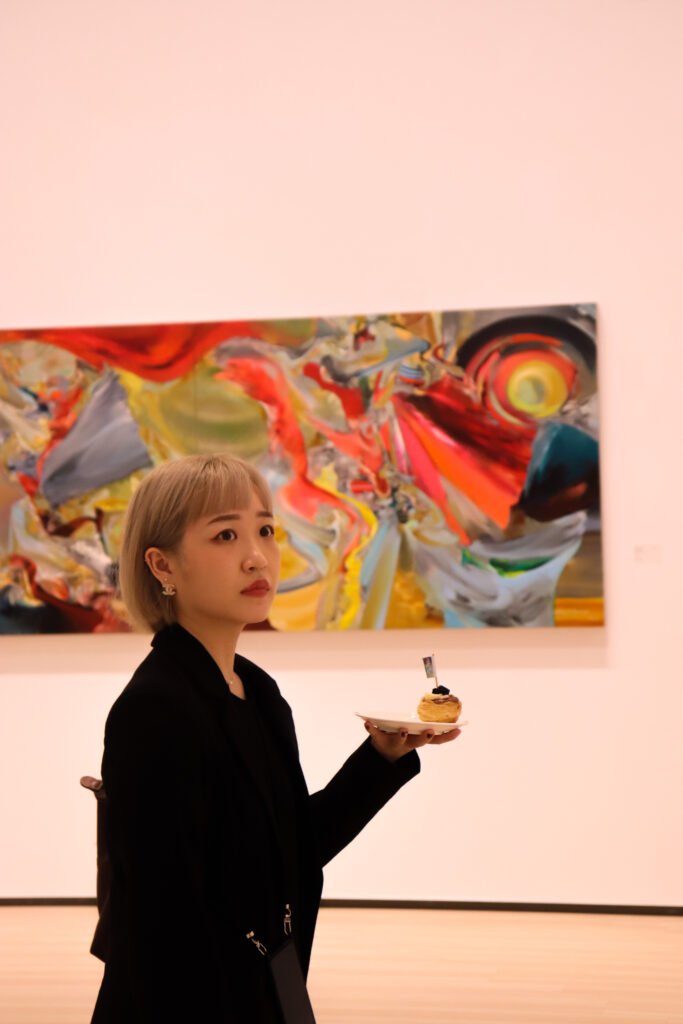
Wu Shuang’s latest exhibition is a seamless flow of emotions.
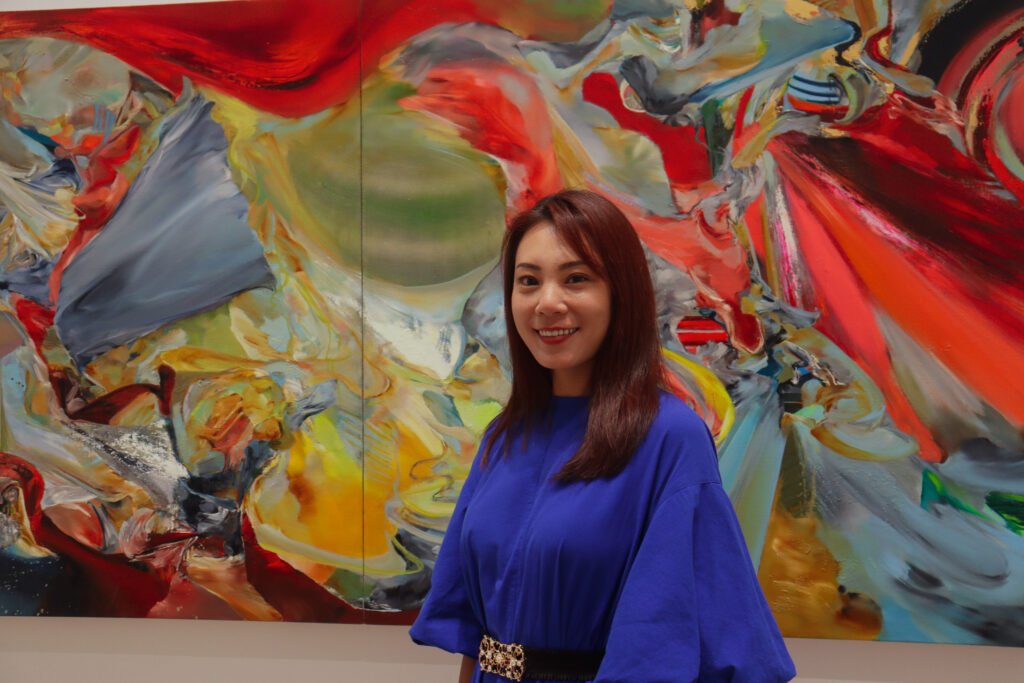
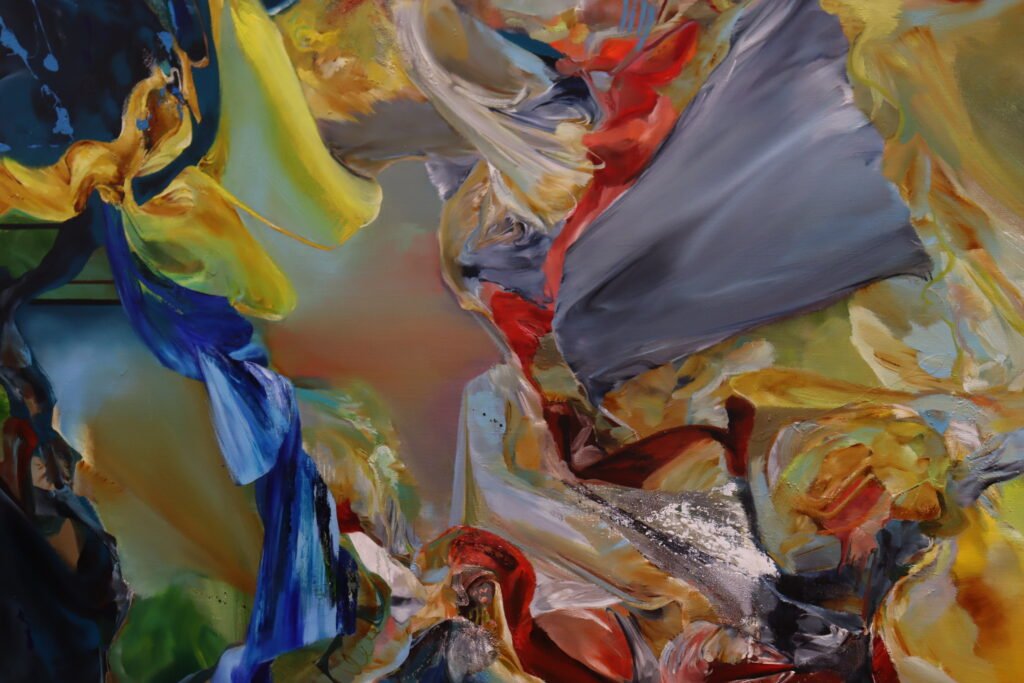
Chongqing-born artist Wu Shuang knows exactly how to spark artistic conversation. Her paintings are easily recognisable by the seamless flow of colours and abstract shapes which keep spectators talking. Her new exhibition at Taipei’s Whitestone Gallery, Whirling Light, is a comprehensive record of her feelings during life in lockdown in Beijing, where visitors can see not only a subtle change in the style of her art but also in the themes present – which lean towards baroque abstraction and human forms. During our visit to the gallery, we talked with her about the importance of light, passion and the passing of time.
Q: What events or topics can we see in this exhibition?
WS: I did these paintings during lockdown in Beijing. I am lucky because as an artist I could be on my own in my studio everyday. In fact, I spent most of the lockdown there. Sometimes I watched the news and felt something that I needed to put on a canvas. Sometimes I had conversations with my friends that gave me ideas of what I wanted to paint. I think these paintings represent my search for freedom during a time where we all were longing for it. Light was especially inspirational. Sometimes I just watched how the light entered the studio and the shadow patterns on the floor. I feel like now I appreciate light more and it has become an important part of my life. Hence, the name of this exhibition.
Q: When inspiration strikes, how do you translate the initial idea into a painting? In other words, what is your creative process?
WS: To be honest, the first brushstroke is sometimes accidental. I am in the studio sipping my coffee and there is a big blank canvas in front of me. Sometimes the first colour I use is inspired by emotions triggered by the news I am watching or any other thing that I have seen. Then I start mixing. What is really exciting about my paintings is that I never know when I am going to finish painting them. Sometimes I can’t decide whether they are finished or not. Sometimes I never finish them.
Q: In the past you have said that the purpose of your art is to offer hope, what do you mean by that and why do you think it is important for art to give hope to people?
WS: I see art as a bridge in time. During lockdown I realised that time goes by but that does not necessarily mean that we do. Our life is not limited to this moment, to this existence. The emotions conveyed by a painting remain throughout time. A spectator now can feel the same when looking at a painting that a spectator from 200 years ago. I feel that the legacy of art can bring people hope as it can bring them a feeling of relief and empathy. I want my paintings to be there for people whatever their interpretation of the emotions in my paintings may be as long as it helps them to deal with that sense of ephemerality.
Q: What or who serves as a constant source of inspiration for your art?
WS: In this exhibition, light was my preferred muse. However, I find nature very inspirational too. My last exhibition, The Light of Nature, featured many animal and natural forms. As for fellow artists, I really like the work of Cecily Brown, whose paintings look like a continual flux of erotic energy. Her paintings are so filled with passion. I also feel that we have a similar approach to painting. She said that “the most difficult part of painting is when you’re close to completion and one misplaced stroke can ruin everything.” I can relate to that.